Unstable

Instability is accelerating in many spheres of life on Earth.

Earthquakes have accelerated beyond the record-setting pace described in Rockin’ and Rollin’ with sixteen magnitude 6.0 quakes in the first sixteen days of May. So we’re running at the rate of one major quake per day. Here’s the list:

Date/Time Magnitude Place
2014-05-16T11:01:42 6 113km NE of Grande Anse, Guadeloupe
2014-05-15T10:16:41 6.2 50km WSW of Alim, Philippines
2014-05-15T08:16:34 6.6 96km SSE of Ifalik, Micronesia
2014-05-14T20:56:13 6.1 99km SSE of Ifalik, Micronesia
2014-05-13T06:35:24 6.5 108km SSE of Punta de Burica, Panama
2014-05-12T18:38:37 6.5 Southern East Pacific Rise
2014-05-10T07:36:01 6 11km W of Tecpan de Galeana, Mexico
2014-05-08T17:00:17 6.4 15km N of Tecpan de Galeana, Mexico
2014-05-07T04:20:33 6.1 96km SW of Panguna, Papua New Guinea
2014-05-06T20:52:26 6.1 West Chile Rise
2014-05-05T11:08:43 6 9km S of Mae Lao, Thailand
2014-05-04T20:18:24 6 23km ESE of Ito, Japan
2014-05-04T09:25:14 6.1 South of the Fiji Islands
2014-05-04T09:15:53 6.6 South of the Fiji Islands
2014-05-02T08:43:37 6 70km SSE of Namlea, Indonesia
2014-05-01T06:36:35 6.6 201km WNW of Ile Hunter, New Caledonia

And Oklahoma, famous for tornadoes but hardly for quakes, has seen an incredible increase in earthquakes with a magnitude of 3.0 or greater, from about two per year from 1975-2008, to forty per year in recent years:

     What’s causing the huge spike in earthquakes in Oklahoma?

The US Geological Survey found that from 1975 to 2008, central Oklahoma experienced one to three 3.0-magnitude earthquakes a year, compared with an average of forty per year from 2009 to 2013. And it looks like that number is going to get bigger. It’s only February, and the state has already logged more than twenty-five quakes of 3.0-magnitude or larger this year, and more than 150 total quakes in the past week alone.

This instability isn’t just in the Earth’s crust. Check these real estate statistics that came out of China late last week:

  • 1st-tier cities sales fall 40% y/y (year over year)
  • 2nd-tier cities sales drop 65% y/y
  • 3rd-tier and 4th-tier cities sales decline 32% y/y

In a country where real estate development has played an outsized role in their long economic boom–and on a planet where Chinese economic growth has contributed greatly to the world not sliding off into total Depression–these dropoffs are shocking. The Chinese government has been well aware that they have a real estate bubble, and they’ve been trying to deflate it gradually, but those numbers don’t quite equate with “gradual.” Their solution to bring things back to life? What else? No money down!

     In China Homes Are Offered “Zero Money Down”

Since March, 20 property developers in Guangzhou have been offering “zero down-­payments” to attract buyers, in addition to large discounts and tax refund, the National Business Daily reported Monday.

I’m sure that will work out real well.

How big is the China real estate bubble? It turns out someone at a private business meeting surreptitiously recorded the comments on this very topic by the vice-chairman of China’s biggest property developer. He describes Chinese real estate as an epic bubble:

“In 1990, Tokyo’s total land value accounts for 63.3pc of US GDP, while Hong Kong reached 66.3pc in 1997. Now, the total land value in Beijing is 61.6pc of US GDP, a dangerous level,” said Mr Mao.

“Mr Mao said China’s house production per 1,000 head of population reached 35 in 2011. The figure is below 12 in most developed economies “even when the housing market is hot; no country has a figure of greater than 14”.

The Chinese have been so enamored of real estate that they’ve been buying lots of it in California as well:

Cash buyers reach record level of all home purchases at over 42 percent: 80 percent of all sales over past year in Irvine went to buyers from China?

In California, Chinese nationals and immigrants are “parking their cash in single-family homes,” said Meyers.

In Irvine, Calif., for example, 80% of sales over the past year were to Chinese buyers, he said.”

This is a massive amount of targeted home purchasing in one city. I’ve had a few contacts that sell homes in the Orange County market telling me that 7 out of 10 purchases were going to Chinese buyers, all with cash offers…Irvine is no small city with 230,000+ people living in the city.

These frenzies always work out so well in the long term. Sure. (Do I even need to say it to anyone considering buying residential real estate in California, where bidders now present PowerPoint presentations about their offers to the owners? Be careful out there!!!)

And speaking of China and instability, Japan and China have been rattling the war sabers, but most aren’t aware that they are in a no-holds-barred currency war, with each country struggling to take down the value of its own currency to try to make their exports cheaper in world markets. Currency wars don’t generally end well.

And China has territorial disputes not only with Japan, but with Viet Nam and the Philippines as well. We’ll cover those in a separate post on how the War Cycle is progressing.

And what about instability in the banking system. So far this year there have been sixteen high-profile banker deaths: murders by angry customers, suicides, and mystery deaths. By mystery deaths I mean deaths under very suspicious circumstances where the deceased gave no indication at all of wanting to commit suicide, for example, sending an e-mail to a spouse arranging that night’s dinner plans–just an hour before they jump out of a 30th floor window? Some of these people were involved in government investigations of their activities and so they may have known more than their employers wanted them to divulge. Or perhaps these employers–it turns out that the four largest US banks hold $680 Billion in life insurance on their individual employees–simply want to collect on some insurance policies. And trying to find out about this doesn’t work because the US regulators are calling this a “trade secret” of each of the banks:

     Suspicious Deaths Of Bankers Are Now Classified As “Trade Secrets” By Federal Regulator

Well, if anyone wants to verify any of this–though I don’t recommend it–here is a starting point:

     52 Year-Old French Banker Jumps To Her Death In Paris (After Questioning Her Superiors)

And here is the strange story of a guy who worked for the US Federal Reserve for 26 years threatening his boss, the head of a major US housing agency, with murder, apparently over a bad job review the boss gave him!?!

     Former San Fran Fed Employee Threatened To Murder Ex-FHFA Head Ed DeMarco

Stranger still is that the guy was easily released on bail.

So people seem just a bit testy in the banking and finance world. The question for the rest of us is: how much of our savings do we want in these people’s hands? You know my vote.

Instability has unexpected consequences. Some countries, such as Pakistan, are now so unstable that polio is making a comeback:

In February, the WHO found that polio had also returned to Iraq, where it spread from neighboring Syria. It is also circulating in Afghanistan (where it spread from Pakistan) and Equatorial Guinea (from neighboring Cameroon) as well as Nigeria, Ethiopia, Somalia and Kenya.

I guess those countries are on the Who’s Who list of instability.

This post could go on and on, but I’ll end with a high-quality video showing some of the earth changes and extreme weather in April:

     Signs Of Change The Past Month Or So 2014 (4) April/May


Rockin’ and Rollin’

Regarding earthquakes of magnitude 6.0 or greater, the post Earth changes statistical update said:

These days, the planet has one of these potentially damaging earthquakes on average every two and a half days…

Well we’ve just had 27 of those magnitude 6.0+ earthquakes in the last 30 days! So now we’re up to almost one per day.

If we take the strength down to the magnitude 5.1 level that rattled the nerves of plenty in Los Angeles on March 28, there have been 183 of those in the last 30 days, so that’s six per day on the planet.

If you live in an earthquake zone and have been thinking that this acceleration is no big deal, all I can say is: please reconsider your position! Literally! Or, if you want to maintain your position, ask the US Government, they know everything, tell the truth about everything, and they are certain to tell you that there is nothing to see here, move along.

That same US government refuses to fund an earthquake early warning system for California. The US Geological Survey says they can implement one for $16 million. The US can’t afford that, of course, because they are too busy buying tanks that the US Army says it doesn’t want:

     U.S. Army to Congress: No New Tanks, Please

but 42 per year are purchased anyway at more than $6 million each. Clearly Congress thinks it’s better to blow people up than to save lives.

And you might be thinking that the early warning system wouldn’t work anyway. Well, there is already one in the world that works quite nicely. In Mexico. They built it 21 years ago–after thousands died in the 1985 Mexico City earthquake. One set of system alarms is at the Mexican TV stations. Here’s a video of a Mexico City newscaster getting the warning (that siren in the background) 71 seconds before he feels the fuerte (strong) movement from yesterday’s magnitude 7.2 earthquake off the west coast of Mexico:

     Mexico Earthquake 2014 | Mexico LIVE TV News Anchor REACTION Full Footage Magnitude 7.2

For the record, California also refuses to fund that early warning system despite the fact that they are enjoying another brief budget surplus as they always do when the stock market bubbles over with Initial Public Offerings of companies that are losing money. Yes, 83% of these new stock offerings over the last three months are money-losing companies. Here’s the chart:

IPO_20140418_IPO

That almost equals the all-time record for such madness of 84% in the year 2000 during the internet/tech stock bubble. Everyone of course now agrees that that was a bubble. But of course they swore it wasn’t a bubble then. And they swear that what’s going on now in the stock market isn’t a bubble. This time it’s entirely rational. So money-losing entrepreneurs and insiders like Suckerberg are selling stock like crazy to the gullible public, filling California’s tax coffers and thus tipping the budget balance to briefly positive for the Golden State.

So, the moral of the story is: Buy the stocks of money-losing companies! There’s no stock market bubble! And don’t worry about that pesky acceleration of earthquakes. Stay put right on those active faults. Your results should be at least as good as shown in this video. I’m sure the peace-loving US Congress guarantees it.


Actual democracy

How often do you hear of a referendum where there is huge voter turnout and 90% vote in favor? We just saw two, both with the theme of secession:

     Crimeans vote in referendum on whether to break away from Ukraine, join Russia

Crimean election Spokesman Mikhail Malyshev said the final result was 96.77 percent to rejoin Russia and 2.51 percent against.

That was with an 83% voter turnout.

     Venice votes to split from Italy as 89% of the city’s residents opt to form a new independent state

In Venice, 73% of eligible voters cast ballots. The last time even 60% of voters turned out for a US Presidential election was 1968.

And it’s fairly clear that, despite attempts to quash it by the national government, Catalonia will vote to secede from Spain on November 9:

     Spain Says Catalonia Can’t Vote for Independence, But Catalans Will Go Ahead Anyway

Last September 11, Catalonia’s national day, hundreds of thousands of Catalans formed a vast human chain across the region to call for independence.

According to a site that tracks all of the current wars on the planet, there are 33 other states working to gain independence from their national government. That’s in addition to the 534 militias-guerrillas and separatist groups who are actively fighting their own national government in 60 countries.

Perhaps people are just a bit tired of the confiscation of a huge chunk of their earnings by massive government bureaucracies that: use that money to spy on their own citizens; pass laws that clearly favor their interests over the interests of the people, including laws that apply to regular citizens but not to the lawmakers; jail people for stealing $500 from a convenience store but give rich cronies like Jon Corzine a free pass when they try to steal a billion dollars; start wars ruining countless lives and costing trillions of dollars, indebting current and future generations, wars that very few people want:

     Americans Think the Afghanistan War Was a Mistake, Just Like All the Other Wars Since 1950

It took two years or less for public opinion to turn on the wars in Korea, Vietnam, and Iraq.

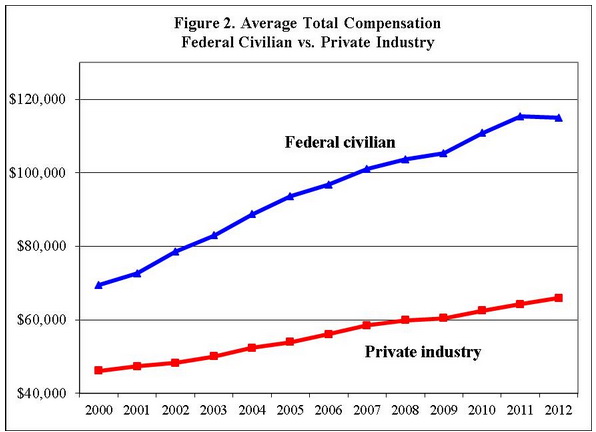
that pad their own salaries when regular people are struggling, as shown here:

Fed_V_Civilian

When benefits such as health care and pensions are included, the federal compensation advantage over private workers is even larger, according to the BEA data. In 2012, federal worker compensation averaged…74 percent more than the private-sector average.

that create trade agreements such as the TPP, written in secret by corporate lobbyists, covered here by Bill Moyers:

     The Top Secret Trade Deal You Need to Know About

that continue playing global power games while people in the US lose basic services:

     US Prepares To Provide A Billion To Ukraine As Detroit Plans Mass Water Shutoffs Over $260 Million

Oh how, as we all know all too well, this list could go on and on. The more the powermongers try to centralize all control, the more they are creating resistance as people rightfully try to bring real governance back to their communities. Charles Hugh Smith has been doing some excellent writing recently on how the huge lumbering centralized structures created by government are a very poor match for the complexity (and speed, I would add) of today’s world (The Incompetence of the Federal Reserve and Deep State Is Unavoidable):

The incompetence of these organizations is not a reflection of the competence or intelligence of their managers–it is the intrinsic consequence of their limited control of complex systems. If the system has reached the point of being ungovernable, even the most brilliant and experienced managers will fail because it’s not the managers who are incompetent, it’s the organization itself that is incompetent.

I consider this move toward secession to be trend, not anomaly. Expect acceleration. In these votes for secession, people are getting just the smallest taste of actual democracy, so–and this is the true anomaly in today’s world where the political process has been captured by large corporations known as political parties, giving many people the correct idea that their vote counts for little or nothing–the turnouts are huge and the votes decisive.

I would go even farther: Today’s political process is intentionally designed to funnel the beautiful and brilliant energy of people’s good will–via voting where the choices are poor, monetary contributions, letter-writing campaigns, emotional attachments to issues and politicians, etc–into a black hole of ineffectiveness so the power elites can exercise ever-increasing control. They will fail spectacularly.


Earth changes statistical update

Just over a year ago, the post What is the Transition? Part 1 presented statistics and charts showing that there is an acceleration in extreme weather events and geologic changes. And there have been several posts with specifics, including these:

     The Weather Gets Even Wilder

     Weather Wildness Update

     Britain faces choice of saving town or country from floods

This is a statistical update showing that this exceedingly important trend continues.

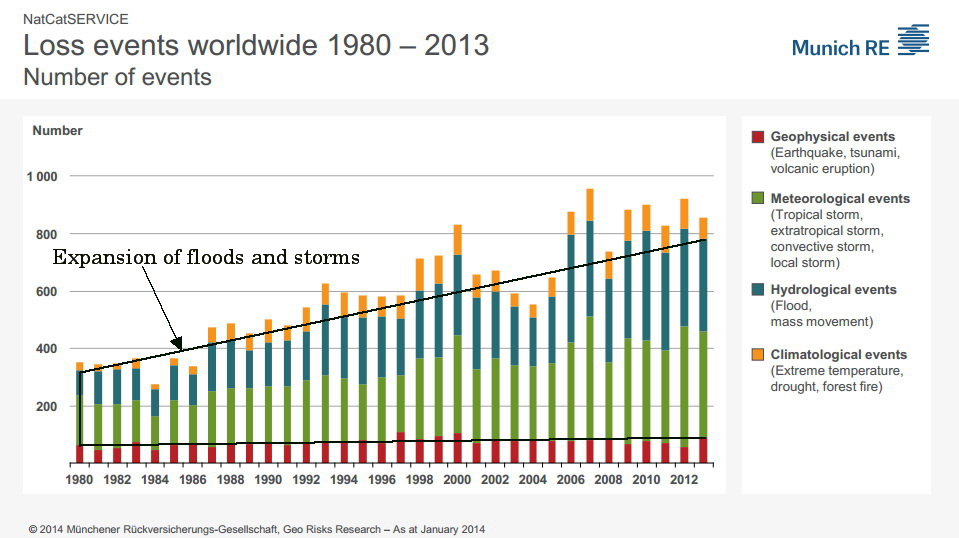
For starters, here is a chart from the world of yet another industry whose original intent–a way to spread financial risk that could overwhelm an individual to a wider community–has been perverted to massive investment pools from which any payment is not celebrated as a victory but is called a loss. Thus the chart of “Loss events worldwide 1980-2013” from the largest re-insurance company in the world, Munich Re. I use it so that any reader who might still be mired in “it’s just better reporting because of the internet” delusion about accelerating Earth changes–I heard of a person who still claimed that recently, so there must be more–can put that aside. So, not from the woo-woo world, but from the Mr. Gradgrind hard-nosed no-nonsense actuary-driven world where all things are calculated in currency and where the business model depends in great part on frightening people into buying more insurance than they need:

MunichReWeatherAndEarthChangesLines2wTextI added the cone lines highlighting the expansion of damaging floods (the blue portion of each bar) and storms (the green portion) from around 250 per year in the 1980s to around 700 per year for the last eight years. That’s a mighty clear indication of trend as opposed to outlier.

The chart does not show all damaging floods and storms, just those that caused losses for the insurance industry. The chart shows a similar acceleration in damages from “extreme temperature, drought, forest fire” (the yellow part of each bar).

It shows a fairly constant set of losses from geologic events, but this chart does not tell the true story of geologic events because, worldwide, very few have earthquake or volcanic eruption insurance, so there are relatively few loss events from these for the insurance industry.

According to those who closely monitor volcanic eruptions, these set a new all time record in 2013, with 84 volcanoes erupting, beating the previous record of 82 in 2010. There were even volcanic eruption clusters:

     Seven Volcanoes In Six Different Countries All Start Erupting Within Hours Of Each Other

And then there was this “minor problem”:

     Scientists find new volcano rumbling under Antarctica ice: 1,370 tremors: “It may blow or it may not. We don’t know.”

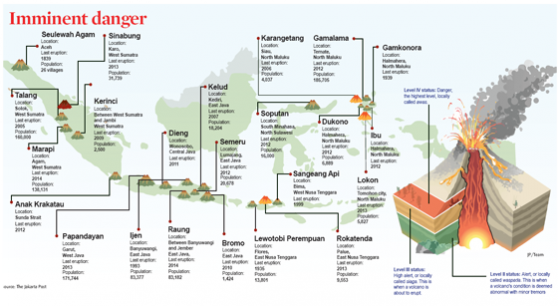
And with 32 volcanoes having already erupted this year, 2014 is off to a thundering and deadly start. After this in Indonesia:

     Villagers run for their lives as Sinabung volcano kills 16 in Indonesia

there was this from the Jakarta Post:

     19 more volcanoes on alert

Jakartavolcanoefeb4.img_assist_custom-560x306

     Electric universe: Pyroclastic flow from Sinabung volcanic eruption last month produced string of ‘tornados’

Here is a video link to those tornadoes.

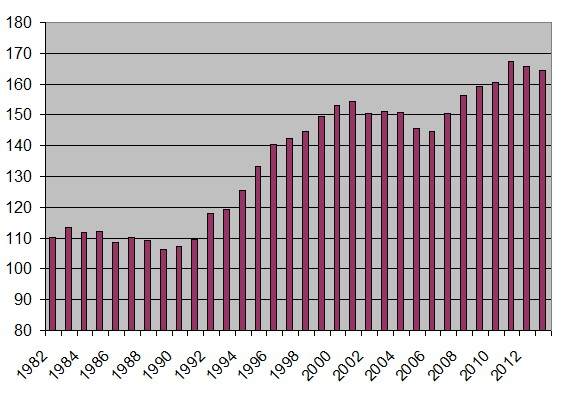
If I had all the data to chart volcanic eruptions, it would likely look very much like this chart of the 10-year average of earthquakes of magnitude 6.0 or greater, updated with 2013 data:

EarthquakesMag6_2013

These days, the planet has one of these potentially damaging earthquakes on average every two and a half days, though more typically they come in clusters as well:

     Global outbreak of strong earthquakes on anniversary 9.0 Fukushima earthquake

quake_map

There were no significant tsunamis in 2013, so my previous comment from the end of 2012 still seems appropriate:

According to data at the NOAA Global Historical Tsunami Database, which has records going back to 2000 BC, there have been 34 tsunamis with a wave height greater than twenty feet over the last 400 years. Six of those, or 18%, have occurred since the year 2000…In the Twentieth Century, there was a tsunami with a twenty foot wave height about once every ten years. In this century, it has happened once every two years, resulting in the deaths of a quarter million people despite the fact that none of these tsunamis struck a major city.

Sinkholes have continued unabated, though in the rain-drenched UK, there have been multiple large land movements:

     Huge cracks appear in Jurassic Coast a third of a mile inland after landslide in UK

UKarticle_2570052_1BE7D39F000005

And given that the world saw a very strange outbreak of mid-Winter brush and forest fires:

     Despite hurricane and record flooding, fire crews dealing with large bog fire near Aberystwyth, Wales

     Winter wildfire weirdness continues: Firefighters tackle 100-acre grass fire near Shawnee, Oklahoma

     Wildfire in western Broward burns 350 acres, Florida

     Are ‘drought conditions’ really to blame for winter wildfire outbreak across U.S.? Wildfire breaks out in Florida marshland‏

     Another wildfire in Norway: Fire on Norwegian coast destroys 140 buildings

     Fire devours historic Norwegian village, 90 people hospitalized

     Many Tibetan monasteries and famous sites destroyed this winter by mysterious ‘wildfires’

     Take cover! Meteor fireballs rain down across U.S. – Outbreaks of wildfires reported

it seems I would be remiss in not mentioning that meteor fireball sightings have been increasing dramatically in recent years. Confirmed sightings doubled from 2011 to 2013:

FireballsEnglish_Version_2014_6

Do I report all this to frighten? Not at all. I report it because it is the reality in which we are living; because I have learned the hard way that standing firm in the face of nasty powerful trends is very high risk behavior and usually turns out poorly; and because I want those who read Thundering Heard–who are presumably open to the idea that the accelerating changes we are seeing in most fields of life are related and are very important for humanity and for each of us–to stay alive so that, after the collapse of the financial system, they are ready to help rebuild society based on principles that include wisdom, creative intelligence, and compassion rather than the rampant and self-defeating materialism that is disintegrating our precarious “civilization.” (The quotes around civilization refer to Gandhi’s remark: “What do I think of Western civilization? I think it would be a very good idea.”)

So as I say to my younger cats when they bound out the door at night to face the local wildlife: Be careful out there.

“Britain faces choice of saving town or country from floods”

That title is a quote from the chairman of the UK Environment Agency informing people that there is no way the country has the money to save–that is, build flood defenses for–both city and rural areas:

     Britain faces choice of saving town or country from floods, says agency chief

What’s happening in Britain is a perfect example of what people in an increasing number of regions are facing: a relentless parade of major, deadly storms. Decades back, England was William Blake’s “green and pleasant land,” celebrated for its mild weather with the occasional major storm. Now it’s a rare week that doesn’t have 100mph winds strafing some part of the British Isles. Here’s a bit of high surf in Wales:

UK124826

(Photo source: Huge waves smash into British coastline, swells up to 75 feet recorded off-shore, UK government considers establishing tsunami-warning system)

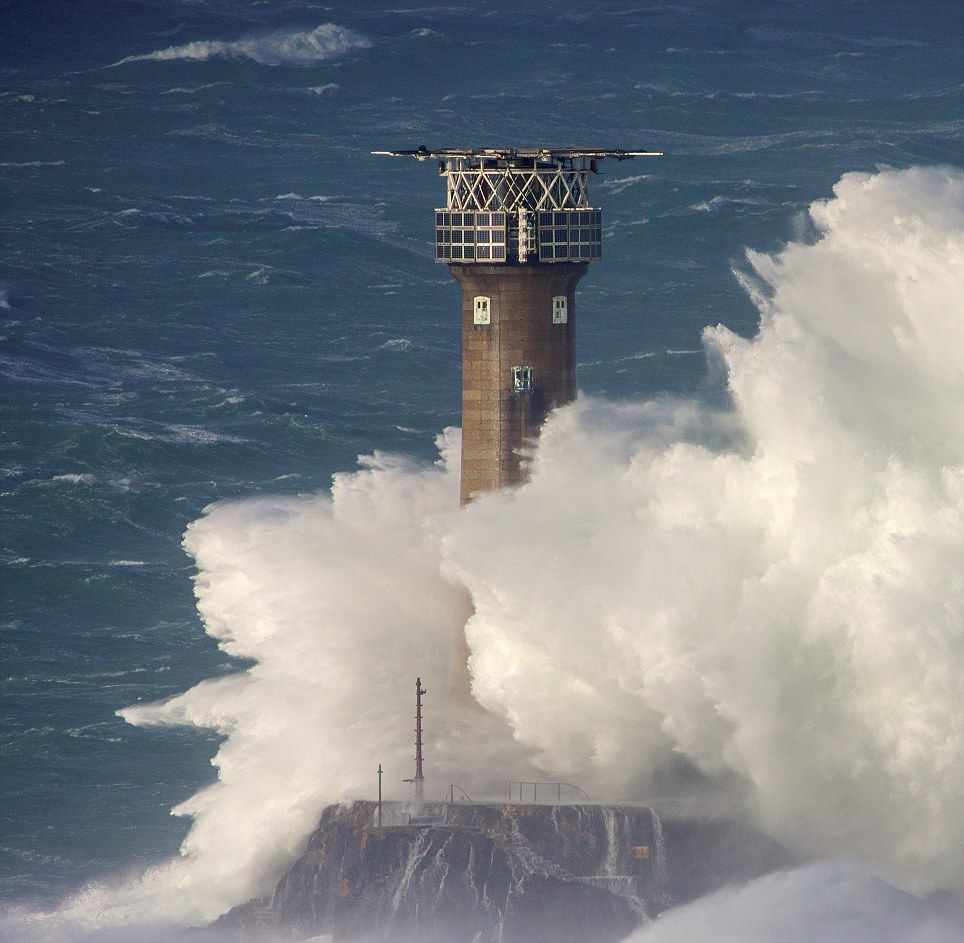
And a lighthouse in Cornwall:

Cornwallarticle_2554557_1B4C531B000005

(Photo source: UK storms: While some FLY in 80 mph winds, others wade through murky water to salvage what little they have left (amazing photos) )

Even where houses are not on coasts or in flood plains, 1.6 million homes are said to be at risk of flooding from the water table rising.

From the BBC:

     10 key moments of the UK winter storms

And CNN:

     Atlantic storm brings more misery to drenched Britain: heaviest rainfall in 250 years

     UK government sends 5,000 military personnel to flood zones as hurricanes keeping coming

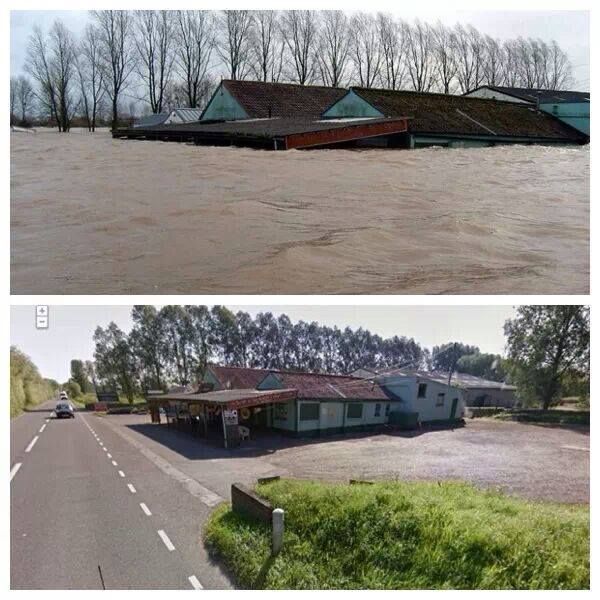
Somerset1622103_214327935429018_188120

(Photo source: UK Floods Could Last Months, Scientist Warns  )

*  *  *

Food For Thought

The bigger question is whether the UK Environment Agency will be able to save town or country. In my view, they won’t have the time or money to save either. How often do people have to hear about unprecedented winds, rain, and waves–storms that almost everyone now realizes are ramping up in intensity, not receding–before they move away from coasts, flood plains, and low-lying areas? Perhaps some few will move to high ground, but it’s almost certain that most will not. Most, even faced with complete destruction of their homes, show a Monty Pythonesque “bravado and derring-do” and vow to rebuild on the same spot, egged on by clueless newscasters and politicians. As someone who studies cycles, I conclude that, if every culture on the planet has, in their oral and written traditions, reports of floods that totally cleanse the land, there is a reason. And it isn’t because there was one really big worldwide flood. It’s that cyclically, repeatedly, the Earth’s surface gets an intensive cleansing. From the way we are treating the planet, isn’t it obvious why? If the Earth didn’t do this cyclic cleansing of its own surface, would there be any humans here at all? As I said: food for thought. I know many will reject such thinking. All I am suggesting is that eyes and minds be kept open to the steadily emerging evidence.

For example, the British storms have swept away the sand from many beaches. Here’s a story that the storms uncovered human footprints from 800,000 years ago. If that’s correct, then we could be talking about lots of cycles:

     Ancient footprints dating back 800,000 years found in Norfolk


More shackles readied for deployment

Darth Summers made a speech on Nov. 8 to a gathering of economists at the IMF. My guess is that they had Darth (OK, Larry) give the speech because he doesn’t currently hold a position with any institution that could then be blamed and hated for the policy promoted in the speech. (Here’s the speech, though I don’t recommend it.) However, I think it wise to consider the speech an official announcement of the latest wicked that this way comes.

The policy is that savers will soon be hit with negative interest rates. Now Larry didn’t say this directly, he slithered around it and offered the “clear justification” for it. But in reviews of what his admirers called a “brilliant” speech, the admirers were quite clear in their understanding: negative interest rates…in cashless society! That was the full policy implication.

So people would have to pay the bank interest on their own savings. So if the negative interest rate were -3%, if you had $100 in your account, you’d have to pay the bank $3 in interest. And just in case anyone had any ideas of getting their savings out of the banks, well, get their savings out into what? In a cashless society, your money would simply be an electronic entry in an account. Getting your money “out” would mean spending it. Which is the problem that Summers and his fiends say they are trying to solve: how to get people to spend, spend, spend their money. They say there isn’t enough “aggregate demand.” Don’t have any money? Then borrow some, it’s really cheap. But in any case, spend!

Of course, this would also mean that when the government borrows money, the interest rate would be negative for them as well. The more money they borrowed, the more money they would collect as the lenders paid them interest!

Now it goes without saying, though I’ll say it anyway, that if you went to borrow some money, this negative interest rate thing would not apply to you. You’d still have to pay interest on your loan. This negative thing would only be for them, that is, the banks and governments. Oh, and large corporations, how could I leave them out. But not you or me. Whether borrower or lender be, either way, we’d have to pay. Know what the average interest rate consumers are paying on their $846 billion in outstanding credit card debt? 13%. Do you think the banks are going to give up that bonanza?

Now any rational person might think: They’ll never do it! Negative interest rates would wreck every pension fund in the world. And so they would: pension funds are all dependent on collecting interest to meet their future obligations. But too bad. If people can’t collect pensions, then they’ll have to stay in the workforce. And with all that competition for jobs, companies can pay lower and lower and lower wages. Why do you think they outsource work across the world! Do you think this paragraph goes to far? Then consider this: Collecting Donations For Wal-Mart Employees That Cannot Afford Thanksgiving Dinner?

At the Wal-mart on Atlantic Boulevard in Canton, Ohio employees are being asked to donate food items so that other employees that cannot afford to buy Thanksgiving dinner will be able to enjoy one too.

So, they think that taxing people’s savings, both in their bank accounts and in their pensions, will get the economy on a sound footing again. Because that’s what these policies are, they are taxes, part paid to government and part to the banks. So why don’t they just say that? Two reasons: first, people tend to get angry about new taxes and they tend to vote out whoever levies new taxes; and, the group at the Summers speech are economists, and all economists know that raising taxes squelches economic growth. So they can’t call it a tax or everyone would point out that the policy is anti-growth. Which it is. But logic left the room of mainstream economics years ago. They maintain their lofty positions as Machiavelli advised: they serve their governing masters well. So these policies have nothing to do with logic. The governing masters keeping their power, that’s what it’s all about. And these economists know who spreads the caviar on their toast points. These policies are designed only to preserve the powermonger status quo.

Plus, they are fairly sure it will be a long time before the public catches on. They can just repeat over and over that this is for jobs and growth, and the majority, desperate for good news, will believe it. And in this ploy, the economists are likely correct. They have been engaged in multi-$trillion Quantitative Easing (money printing) for years and, according to a Reuters poll, three quarters of Americans don’t even know what QE is. And people weren’t asked to explain it, they were given a multiple choice question, so 20% could have answered correctly just by random choice!

Twelve percent of respondents thought QE was a computer-assisted program that the Fed uses to manipulate the dollar. Another 11 percent thought it was part of the Dodd-Frank Wall Street reform legislation enacted following the crisis.

So the economists of The Powers That Be figure they can obfuscate their way through just about anything.

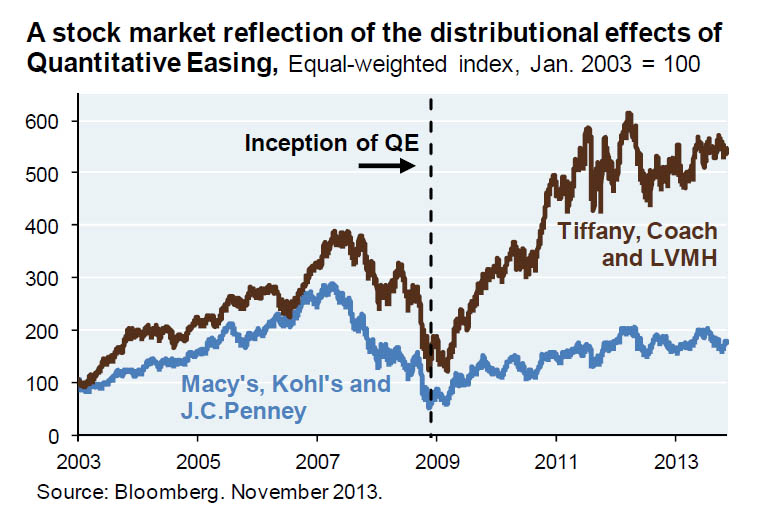
So let’s get this straight. These thieves want to steal people’s savings and pensions. So that people must remain as wage slaves till they drop, filling a growing labor pool being paid wages that are declining in all of the developed economies. And they’ll be great fodder for the upcoming war economy, grateful for the opportunity to build weapons that kill in better and better ways. While the rich and powerful get more caviar, as shown on the chart below. The dark brown line is the average stock price of retail for the rich: Tiffany, Coach, and LVMH. Those stocks have risen 500% since their 2009 lows and are over 30% above their former peak in 2007. The blue line is Macy’s, Kohl’s, and JC Penney, where the disappearing middle class shops. Those stocks are up 100% since 2009 and are still 30% below their former peak in 2007:

QE effect on shoppers

That is a great demonstration of who is receiving all that newly printed money and who is not. These folks want more slaves. And the ability to bomb into chaos any region that does not offer up its people into the slave pool.

Plug-In Vehicle Update

Updating In Praise of Plug-In Vehicles, our mileage after two months with the Chevy Volt is 101 miles per gallon (2.3L/100km for the metric-minded). That included four drives of 350 miles and one drive of 250 miles during which the car runs from electricity only for the first 45 to 50 miles (70+ km), after which it runs from gasoline.

And in response to those who e-mailed warnings that electric vehicles are a bad idea in a world with an imminent EMP event: even though I have made the gesture–because it’s so easy to do–of storing my backup generator and other small backup electronics in a Faraday cage, I do not consider a devastating EMP event to be likely. As stated before, what I detect is accelerating evolution, with likely supply line disruptions. That is what I see, so that is what I plan for. I see no evidence of an impending planetary reset event. With humanity about to reap the full consequences of its good and bad decisions about finance, governance, war, health care, pollution, overuse of resources, taxation, energy, communications, etc., the conditions on this planet are perfect for humanity to learn how to live and how not to live. I think humanity will benefit mightily from this ingenious setup. Let’s see if we can.

The Weather Gets Even Wilder

Just days after the Weather Wildness Update comes deadly Typhoon Haiyan. Some say it is the most powerful storm to make landfall in modern times:

Philippines storm leaves estimated 10,000 dead, destruction hampers rescue efforts

Mainstream headlines published as the storm was hitting the Philippine coast claimed that the storm would not be devastating. But it’s tough for them to say “Nothing to see here, move along” when thousands die.

The amazing Ageless Wisdom Foundation, based in Manila, is already in the field, organizing relief efforts. With the Philippines on the front line of earth changes, they are becoming veterans of dealing with emergencies. They add this to their usual work: ever-honing their formidable attention through their individual multi-decade meditation practices and esoteric studies; building their own retreat center; giving telepathic healings around the world that are so powerful that if you are in the room when they are addressing a person in need in that room, you can feel the entire room heat up, even half a planet away; working in the poorest sections of Manila; the list goes on. And that’s all in addition to their people each working to make a living. They quietly change lives for the better, a beacon to us all for how to be a human during this Transition.

Weather Wildness Update

A few days ago, just a single year after Superstorm Sandy, I saw a post in which someone claimed that the weak Atlantic hurricane season meant that the weather wildness posited by the climate change people was a thing of the past. I passed on quickly (and didn’t save the link), figuring that this was either from the global cooling propaganda crowd, or from someone with an incredibly narrow view of the world. People in Mexico (hit by two hurricanes at once), the UK, and the “small” continent of Asia, which has experienced epic flooding this year, would be likely to disagree with that “thing of the past” idea.

Here are two weather wildness aggregator videos made by someone who does not include Bible quotes. Note the mention by a news commentator in the first video of “the 23rd typhoon to hit this year”:

     Signs Of Change The Past Week Or So October 2013 Part 1

     Signs Of Change The Past Week Or So September 2013 Part 2

A Cycle that Says “Get Ready”

There haven’t been many posts here lately, in part because it looks to me like we are on the precipice of major changes. So I’ve been spending some time finalizing my own preparations in terms of food (backup supplies and the infrastructure for growing more), electricity, water, and so forth. (Hint, hint.) Many think (hope?) that The Powers That Were can keep this all going for years. With the clear acceleration of infighting among the elites, to me that seems like a very bad bet.

So I found this post from Deflation Land to be interesting in terms of us being right on the cusp of major changes:

     Why I stopped worrying and learned to love the currency collapse

“For the past 300 years, the historical pattern has been for the era marked by a century to continue into the following century by fourteen or fifteen years.

“Let me explain. Everyone knows that the 19th Century, its uprightness, its optimism and sense of purpose, the halcyon days of British Empire, came to an end with World War I, starting in 1914 and building to a nasty crescendo by 1916. The 20th Century had arrived, and it had some real horrors in store for us.

“But if we return back another hundred years, we notice that the 18th Century ends in 1815 with the final defeat of Napoleon, that final project of the Enlightenment and of the French Revolution.  With the Congress of Vienna in 1814-1815, we have a new Europe along the lines of Metternich’s plan, and the 19th Century at last is here.

“In 1713 and 1714, we have the Treaties of Utrecht, Baden, and Rastatt, bringing an end to the era of Spain as a major power, and the rise of the Habsburgs.  Louis XIV dies in 1715, after reigning for 72 years.  The Baroque period is over, and we are now firmly in the 18th Century.

“We still live in the 20th Century…We still live in an era of Pax Americana, the old republic very much a strained and tired Empire now, with the U.S. Dollar as the world’s reserve currency.

“That is going to change.

“The next task for History is to dismantle the untenable structures and institutions put in place by late Modernity, which have been extended now as far as they can go. Our debt-based monetary system will collapse, our unbacked fiats will be worthless. The debts and unmeetable obligations will all default.

“There are ironies and great contradictions as the former home and hope of Liberty becomes viciously unfree and increasingly despotic. Our leaders no longer govern, but try instead to rule us — they are less legitimate with each passing day, their laws corrupt or worse. They are nearly finished, and will be swept away with the tide.

“Just as in 1914, the internationalist system will break down, dashing the hopes of the would-be first-world nations. We will probably have a pretty good war as well, or many local ones worldwide. These transitions tend to involve war.”

*  *  *  *  *

Combine the above with the Wheeler War Cycle and other war cycles discussed here, and it looks like our current faux stability–in which the gears of government and the economy grind on and on with little progress in any direction–will, within months, be a memory. The full Deflation Land article is here.