Unknown's avatar

About Thundering Heard

https://thundering-heard.com/

What’s up with the metals? Part 1

First, a digression right off the bat: let me say that I hope everyone who is interested in the precious metals is doing their own research on this topic so that they can make truly informed decisions, especially since I am not a registered financial advisor of any type, these are just my views of the world. One of the best ways I know to become informed on the metals is to get the free e-mails issued by GATA, the Gold AntiTrust Action Committee. You can sign up for their e-mails here. They send out links daily pointing to the best articles about gold and related topics from across the web. OK, end of digression.

*  *  *

Since I was wrong last Spring about when gold would make its next move up, let’s look at the views of three very capable market commentators who were correctly bearish on the gold price during 2013, that is, they thought that the price would drop. They were right, and perhaps their analytical work will continue being right. So let’s look at what they are saying now, and throw in the opinion of the head of the largest gold refinery in Switzerland as well.

Tom DeMark

The first analyst is Tom DeMark. Tom has been a trading advisor to the big institutions for decades. It’s rare for him to give his advice in advance to us commoners, though in his defense, he has published many of his techniques for those who wish to spend the time to learn them.

What DeMark said on December 16, 2013 about the metals is in the last minute of the short interview at this link. He said:

We’re looking for a huge move in gold next year, beginning next year. We think the bottom will occur with the tax loss selling this year.

So what he is saying is that, as soon as those who want to take trading losses on their gold positions for tax purposes (to balance off other gains they had) finish that activity, then price will begin that “huge move” up that his firm is expecting. His price projection, for a long time, for the downside in the gold price had been $1180. In the interview, he said they had revised that to somewhere between $1155 and $1180. The price went down to $1181.40 on the last day of 2013, the last possible day for tax loss selling for the 2013 tax year. That’s probably plenty good for meeting his price target, but we’d have to be institutional clients of DeMark to know whether he now thinks price might still move down to $1155. In any case, by DeMark’s famous work, the price low is already behind us or will be here very soon. There will be evidence below that JP Morgan may have been following DeMark’s advice precisely.

William Kaye

The second fellow who was right about the gold price dropping in 2013 is veteran money manager and former Goldman Sachs employee, William Kaye. Kaye repeatedly gave interviews in 2013 on King World News where he would point out movements of physical gold in the markets that indicated the next phase of price manipulation down by the Fed and the big banks would happen promptly. And it would unfold as he predicted. In this December 31, 2013 interview, Kaye said he thought the gold price could be manipulated down one more time in January, followed by a large, fast move up for the gold price to somewhere between $2,000 and $2,500 in 2014:

My guess is we are now looking at mid-to-late January of 2014 as a probable and absolute bottom, after which it is going to be difficult for sidelined investors to gain a position because gold and silver will then move very, very quickly in the other direction.  That is why most people are going to miss this move…

While all of the Western media is filled with anti-gold stories, China continues to buy virtually all of the available physical gold at these levels, and will continue to do so on any further price declines.  Also, the flow of gold into India has continued because of increased smuggling.  But none of the smuggled gold is being reported in the official import numbers.

One of the primary reasons this gold flowing into India is not being reported is because the politicians themselves control the smuggling rings.  The reason India has such a large current account deficit and a loss of confidence in the Indian currency is because of the bad government policies.  The people of India see this and so they seek refuge, as they always have throughout history, in gold…

As you know, Eric, I have extremely good sources and contacts in India because we’ve done business there for years. If our sources are correct, this year the gold imports into India are very close to 1,200 tons, which is a staggering figure.

On top of that, we have the Chinese importing a mind-boggling 2,200 tons of gold for 2013. That figure actually totals the entire global mine supply for all of 2013 outside of China…

You also have to remember that we have enormous demand from other countries around the world such as Russia, Brazil, just to name two…

Regardless, 2014 is going to be an extremely good year for the precious metals.  I believe we could easily see new highs in nominal terms in both gold and silver.  We may see $2,000 to $2,500 in gold, and $50 to $60 in silver, maybe even higher.  The bottom line is that 2014 will be the year that the cartel gets broken.

Martin Armstrong

Our third commentator is Martin Armstrong. The guy has done some of the best financial cycles work in modern history. As examples, due to his real estate cycle work for the US, he was telling clients–in the 1990’s to give them ample time to act–to be out of all US real estate investments by February, 2007; that real estate prices would then fall from 2007 into 2012, then rise into 2015 in a snapback rally that would sucker a lot of people back into real estate, and then fall again through 2033. (Yes, real estate folks, you read that right, a 26 year bear market in real estate that started in 2007.) A summary of that work published in 2009 is here, and a look at the chart from the first page tells the story very well:
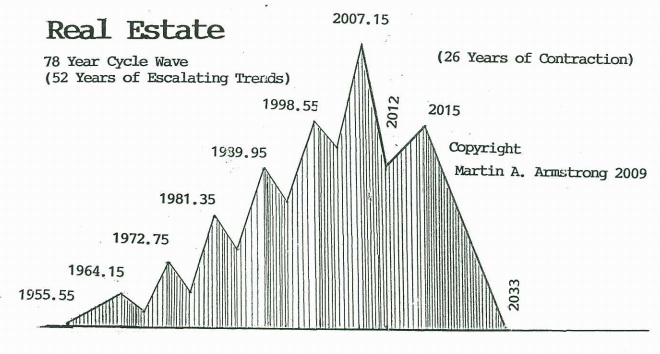
ArmstrongRealEstate

To say that this was good advice, at least so far, would be quite an understatement. Also in the 1990’s, he told his clients that interest rates/mortgage rates would fall till January 2013 and then start an inexorable rise for many years to come. He was only off by six months, interest rates went to their lowest level in mid-2012 and have been generally rising since.

So the guy is very smart. But I don’t have a link to his site on the Thundering Heard home page because it is nearly unbearable to read him daily. Anyone else’s views on anything, he calls those opinions, and pelts them with ridicule and insults if they disagree with his own opinions, which he claims are not opinions, but actual facts.  His cycles work is fabulous, his knowledge of history is formidable, but when he strays from those, as he often does, you have to put your boots on and wade through it. That’s a worthwhile exercise, but you have been warned.

Anyway, Armstrong is our third analyst who was bearish on gold all year, to the point where he called anyone advising buying gold during 2013 to be a fool, criminal, and worse. But all year, he has expected a Directional Change (his capitalization) for gold in this month of January, 2014.

So with DeMark, Kaye, and Armstrong, you have three very capable analysts who think this price downmove is over, or will be in over in this month of January. If I were a person with savings denominated in fiat currency, I would be jumping all over this opportunity. But of course, people need to make their own decisions. As mentioned above, getting the free e-mails from GATA is a great place to start. And no, they don’t sell your e-mail address to others.

So what does the head of the largest Swiss gold refinery have to say about all this?

     Alex Stanczyk: Physical Supply Never Been Tighter

I’ll let the article speak for itself:

Refineries in Switzerland are still working 24 hours a day to cast bars for China, sometimes having difficulties sourcing the gold…

We met with the managing director of the largest refinery in Switzerland and spend about two hours talking to him…Now, this gentleman we were talking to probably has a better idea of physical gold flow than anybody else globally. He sees what is coming from the mines, he sees what is coming from the UK, and all over the world, as well as where its going. He indicated the price didn’t make sense because he has got so much fabrication demand. They put on three shifts, they’re working 24 hours a day, and originally he thought that would wind down at some point. Well, they’ve been doing it all year. Every time he thinks its going to slow down, he gets more orders, more orders, more orders. They have expanded the plant to where it almost doubles their capacity. 70% of their kilobar fabrication is going to China, at apace of 10 tons a week. That’s from one refinery, now remember there are 4 of these big ones [refineries] in Switzerland.

…At this Swiss refinery there have been several times this year on which they were unable to source gold, this shocked me. They’re bringing in good delivery bars, scrap and dore from the mines, basically all they can get their hands on. This gentleman has been in the business for 37 years, he was there during the last bull market in the late seventies. I asked him when was the last time this has happened, that he was unable to source gold, he said never. And I clarified it, I asked: let me make sure if I understand what you’re saying to me, in the last 37 years you’ve worked in the gold industry this has never happened? He said: this has never happened.

When do think the price is going to rise?

“I’m not comfortable to put a time on this. What I do know is that we are on the threshold of a situation that has never occurred before. A squeeze is imminent, it could take 3 months or 6 months, but all I know is that it’s coming, and I know that with 100% certainty.”

What Stanczyk is talking about is shown on the next chart, which has only been updated through the end of October. Hong Kong has imported more gold from Switzerland in 2013 than in all prior years combined!
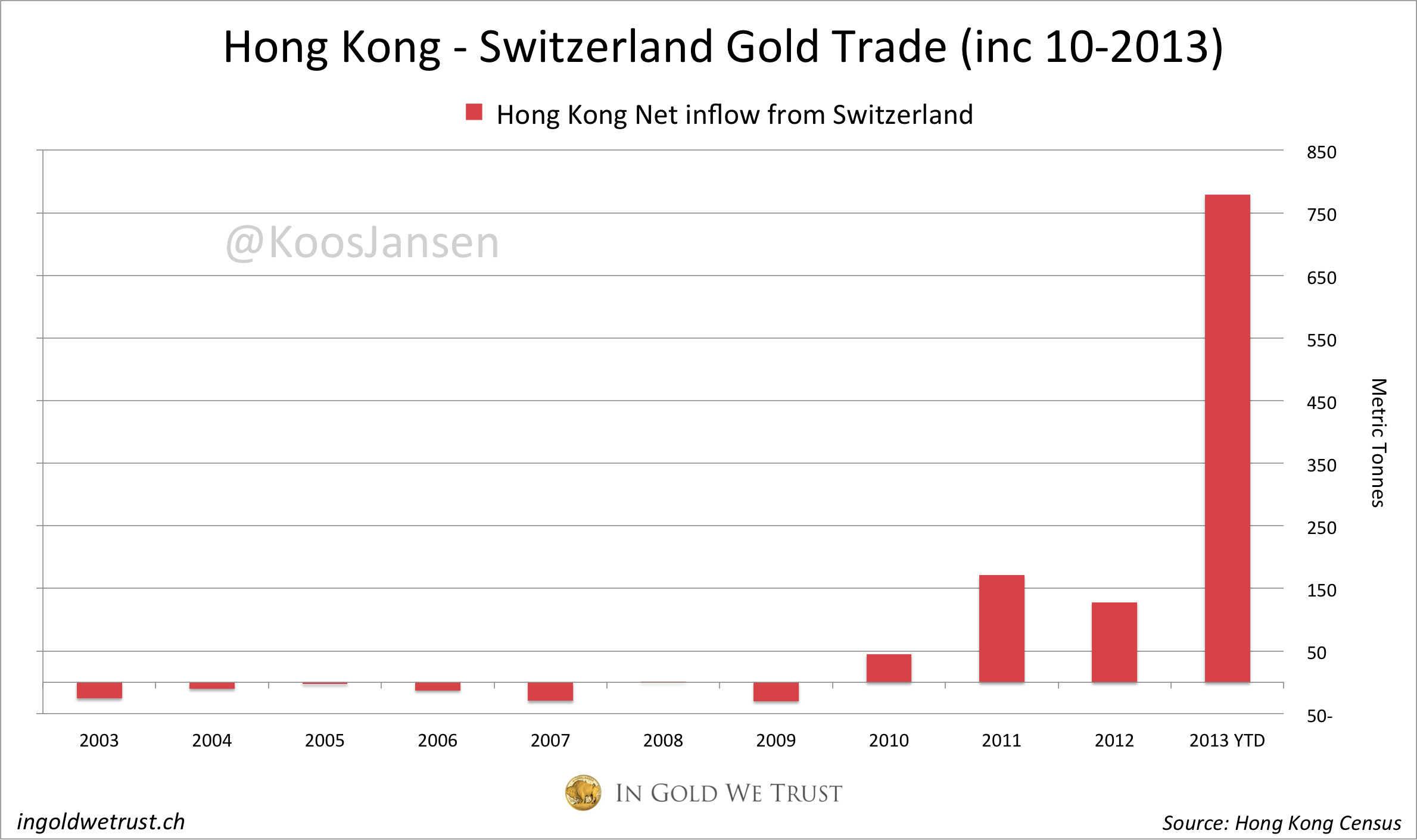
HK-Swiss-gold-trade-10-2013

(Chart source: China Mainland Gold Import Accelerating )

Here’s a way to look at the overall Chinese gold imports from Hong Kong:
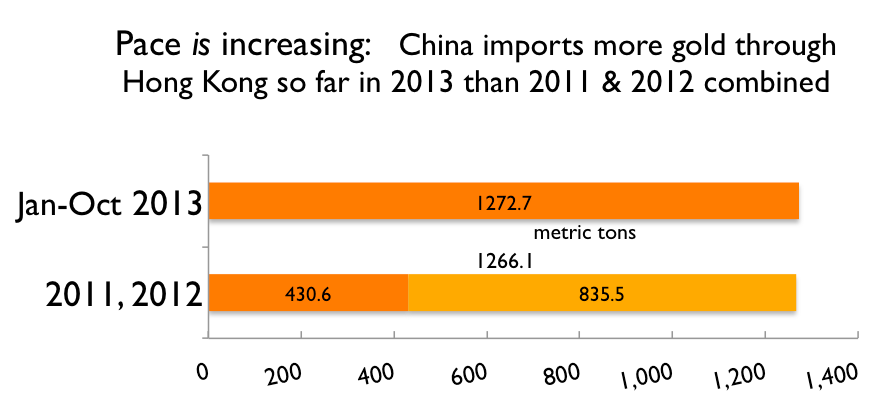
Gold_HK_to_China_2011_2012_2013

(Chart source: China Imports More Gold Via HK In 2013 Than 2011 & 2012 Combined)

And here is a chart of total Chinese imports from Hong Kong by month since Autumn 2011. And this chart doesn’t show imports from other sources or China’s own mine production, which is now the largest of all countries and which is keeping six large refineries busy in China. There have been reports (blatant lies is what they are) in the Western media that Chinese gold imports have been falling. Does this look like falling to you? Each of those numbers are tons.
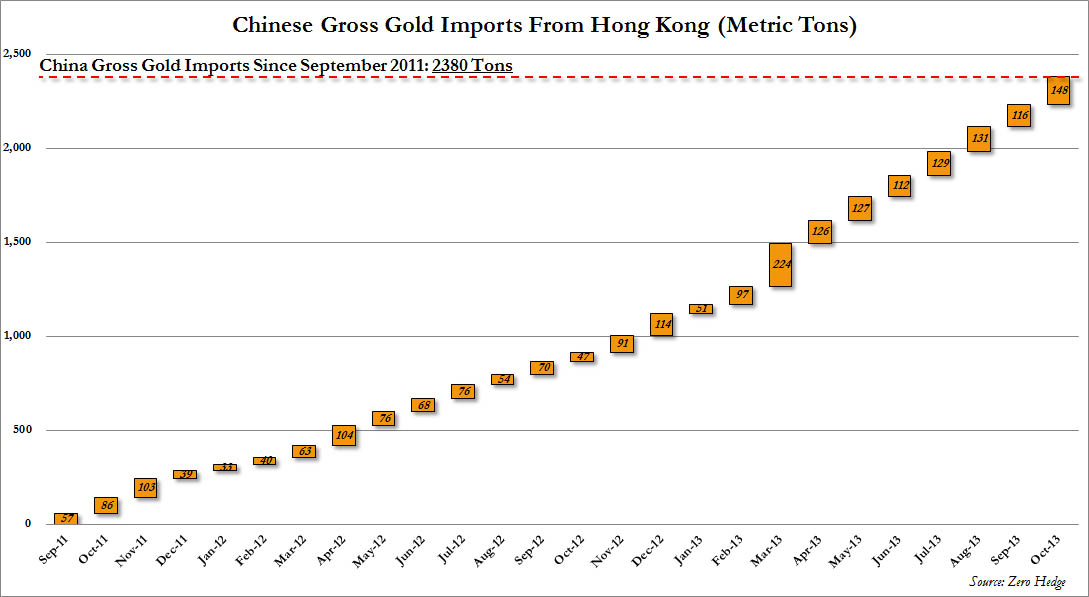
China Gold Imports to October 2013 Gross

(Chart source: China October Gold Imports Surge To Second Highest Ever)

Despite strong government disincentives to buying gold in India, as we heard from Kaye above, the flow of gold can’t be stopped. Here’s a typical story:

     Smugglers smile as NRI carriers bring gold into country legally

It was evident last week when almost every passenger on a flight from Dubai to Calicut was found carrying 1kg (2.2 pounds) of gold…

This strong buying is a worldwide story:

     Scarcity of Gold in Mexico

Including Canada, Australia, and the US, as reported here by the Wall Street Journal:

Sales of gold coins are booming even as the metal’s price is falling…at mints and coin shops around the world, gold continued flying off the shelves…

Sales of Gold Maple Leaf coins by the Royal Canadian Mint surged 82.5% to 876,000 ounces in the first three quarters of 2013 from the same period of 2012. The Perth Mint, Australia’s national coin and bar producer, saw sales rise 41% to 754,635 ounces last year, while the U.S. Mint sold 14% more American Eagle gold coins than it did in 2012, along with a record amount of silver coin.

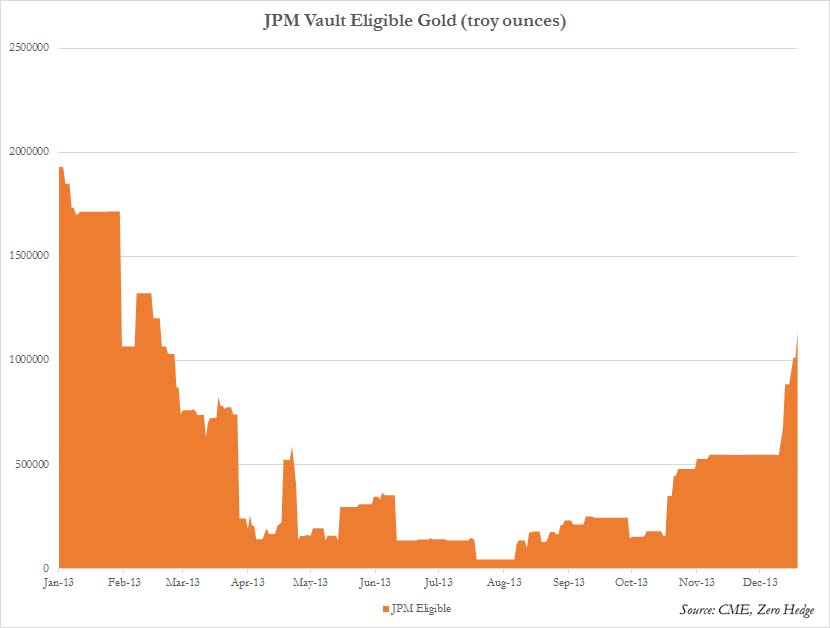
Even JP Morgan, big sellers of their own horde of physical gold earlier, which helped to drive prices lower, has been rebuilding their cache, perhaps guided by Tom DeMark’s work, or perhaps to simply be the manipulating elephant that they have been caught being in so many other markets:

     JPM’s Quiet Scramble To Refill Its Gold Vault
JPM Eligible

In Part 2, we’ll talk about how it is possible to have extraordinary worldwide demand for physical gold and still have a falling price.
War cycle influences

They admit to financing terrorism and they get fined $32,000. Where if I were to do that, I would go to jail for life. –Everett Stern, a former HSBC compliance officer on the fine levied on HSBC for funneling hundreds of millions of dollars to Hezbollah

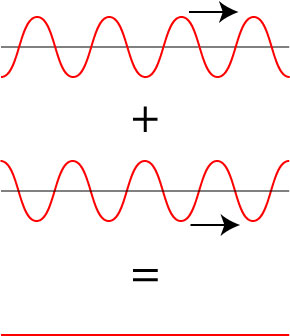
Scientists tell us that when cycles pull in opposite directions, they can nullify one another. They call it wave cancellation:

wavecancellation

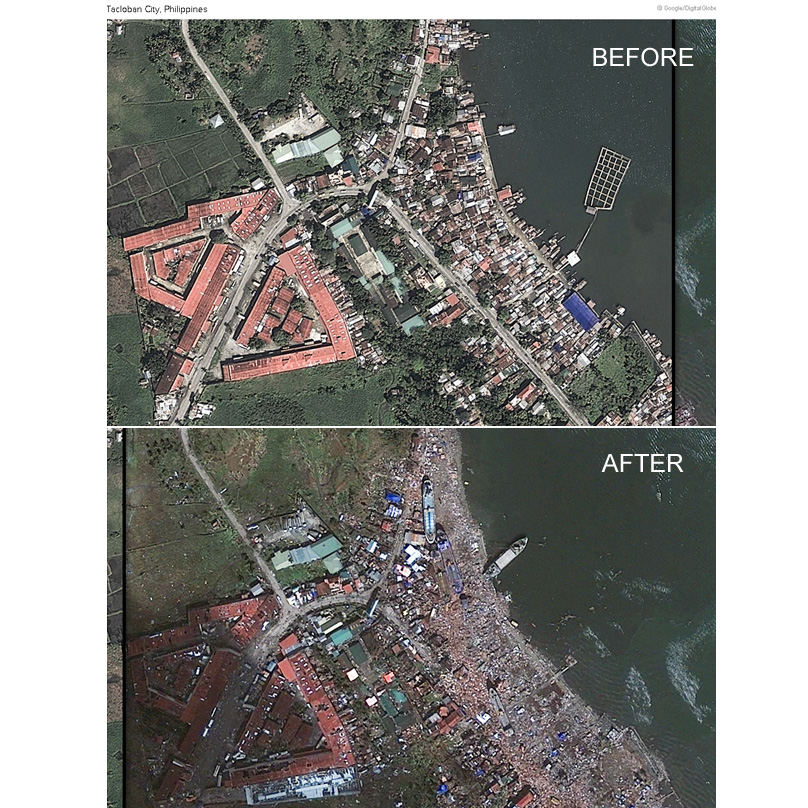
But when cycles push in the same direction, the effects are amplified. A storm surge is one example: As they blow across the ocean’s surface, the winds that create waves accelerate during a storm, causing the cycle of ocean waves to have far greater wave heights. These waves combine with the high tide waters of the tidal cycle, and a storm surge ensues with sometimes devastating results, such as the damage at Tacloban from Typhoon Haiyan:

TaclobanBA2

The so-called Great Recession is another example: Thundering Heard talked about two cycles–the highly reliable 25-year recession/depression cycle for the USA described in What is the Transition? Conclusion; and the cycle of Pluto moving from Sagittarius into Capricorn described in A Forecast for the Next Eleven Years, still in effect through 2024–that combined to make the financial crisis of 2008 very deep and long-lasting, with many saying that these cycles started a depression that is still going on today. There are other cycles, even larger ones, that contributed to the Great Recession/depression, but I haven’t yet had time to explain those, though I plan to soon.

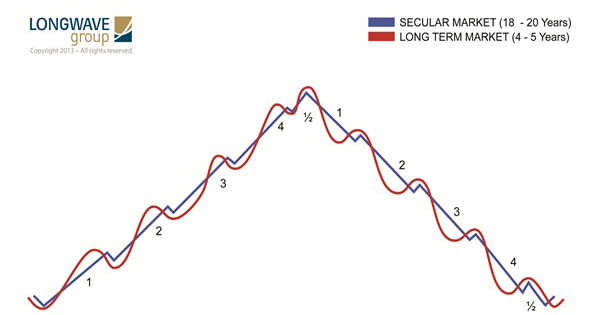
Does the existence of a cycle mean that something must happen? In human affairs, no, often because larger cycles can mute or nullify smaller cycles, represented in this graph, showing that the cycle represented in red might be nearly unnoticeable at times because of the dominant cycle in blue:

LongerShorterCycleSuperimposedcr

However, when larger and smaller cycles point in the same direction, the results can be awe-inspiring. We have such a situation now relating to war. I know of at least five cycles pointing in the direction of war. Two have been discussed before.

One is the Wheeler Index of War and Political Change, discussed here and here, whose troughs have coincided with great precision with the starts of World War 1, World War 2, the War in Viet Nam, and the massive political changes that transformed Russia and China in 1989. The next trough in that cycle is due in 2014.

Another cycle pointing to war in the 2014-2016 period was discussed here.

Again, I know of other cycles that point to major war in the near term, but even if I documented those to the hilt, would it convince us all that that major war must happen? Probably not. But clearly, the influence of these cycles is being strongly felt. Over the last couple of decades, the talk of war has primarily been talk of smaller regional wars. But recently, talk of superpower war has been ramping up.

Here’s one from the Yale Journal of International Affairs, not exactly some emotion-laden incendiary blog, about war between the US and China:

     Who Authorized Preparations for War with China?

The Pentagon has concluded that the time has come to prepare for war with China, and in a manner well beyond crafting the sort of contingency plans that are expected for wide a range of possible confrontations.

     Russia will use nukes in case of a strike – official

     Russia Stations Tactical, Nuclear-Capable Missiles Along Polish Border

     China Declares “Willing To Engage In A Protracted Confrontation” With Japan As “Prime Target”

     US Challenges China, Flies B-52 Bombers Over New Air Defense Zone

     Japan Dispatches F-15s, E-767s And P-3 Into China’s Air Defense Zone, China Scrambles Su-30 In Response

     China Re-Escalates, Deploys Warplanes To Air Defense Zone

     China Slams Abe’s “Malicious Slander”; Warns Japan Is “Doomed To Failure”

     First Glimpse Of China’s Nuclear Submarine Fleet

     US, Chinese Warships “Nearly Collide” In South China Sea

Hold on: how can two massive ships, visible to the naked eye and certainly to radar from hundreds of miles away, “nearly collide”?

     South Korea Unveils It’s Own Air Defense Zone, Overlapping China’s And Japan’s

     Japan Press: “China-Japan War To Break Out In January”

     Japan to bolster military, boost Asia ties to counter China

Japan will boost its military spending in coming years, buying early-warning planes, beach-assault vehicles and troop-carrying aircraft, while seeking closer ties with Asian partners to counter a more militarily assertive China…

Abe’s government also vows to review Japan’s ban on weapons exports, a move that could reinvigorate struggling defense contractors like Mitsubishi Heavy Industries Ltd and Kawasaki Heavy Industries Ltd.

     Is War With China Inevitable?

And of course, the Middle East doesn’t want to be left out of the headlines:

     Israeli Generals Preparing For “Short, Sharp” War Against Hezbollah

     US Drones Taliban Leader; His Troops Vow Bloody Revenge; Pakistan Government Furious At America

     Syrian Army Base Rocked Again By Overnight Explosions, Israel Implicated

     Regional War Scenario. NATO-US-Turkey War Games Off the Syrian Coastline

The Saudis and Israelis are seething that the US and Europe are negotiating with Tehran. Perhaps that is why the role the Saudis played in helping to set up the 9/11 attacks is beginning to get some airplay?

     Inside the Saudi 9/11 coverup

However, I don’t think they need to seethe, a quick look at these Iran negotiations says there is something more than fishy about it. First, there were meetings and it looked like there was an agreement, but at the last minute, the US insisted on lots of changes. This happened when some of the negotiating teams were already at the airport on the assumption that an agreement had been reached. So that first agreement was scuttled.

The parties met again a few weeks later and announced an agreement which was really an agreement to come together again to negotiate the real details. The parties each went back to their countries saying they got what they wanted, despite the fact that these claims were contradictory, as documented here by CNN:

     Iran nuclear deal: One agreement, wildly different reactions

     Iran’s Rouhani: “We Are Not Dismantling Our Nuclear Facilities; Iran Will Maintain Its Uranium Enrichment Programme”

One thing that was clearly promised to the Iranians was no new sanctions. As soon as the detailed negotiations got started, the US broke that promise:

     Iran Quits Nuclear Talks After US Expands Blacklist Sanctions

Iran has quit nuclear talks with world powers, accusing Washington on Friday of going against the spirit of a landmark agreement reached last month by expanding its sanctions blacklist.

Last I heard, Iran is back at the table. I’m happy to hear that. But given the antics of all of the parties, I’m not especially optimistic about the outcome of these talks. They sound like the endless US budget talks where agreements are reached to maintain the status quo and do the real negotiations later.

And the Europeans look like they want to play their part in adding to the warmongering tone:

     Facing Triple-Dip Recession, France Set To Deploy US-Made Drones In West Africa

It appears that the more oil and gold they find in West Africa, the more troops keep showing up.

All of the above shows why it is very helpful to know which human affairs cycles are ending and which are gearing up: knowing the influences that are pressuring people, behaviors start to make more sense. Not rational sense: no one could possibly claim it is rational for Japan and China to be threatening war over rights to small, uninhabited islands. But behavioral sense: one can see how the players are playing their parts. Probably unconsciously, since most people, unfortunately, consider cycles analysis to be some kind of voodoo. Of course, anyone who knows what cycles are in play can be conscious about them, sidestepping negative influences, and hopping on board positive trends, some of which were mentioned here.

But at least we can rest assured that warmongering will be starved for financing: US Government regulators fined big bank HSBC for allowing “hundreds of millions of dollars” to be transferred to Hezbollah. The fine? $32,000. I guess HSBC had to dig real deep into their petty cash drawer to pay that one. The regulators said HSBC, the bank recently fined $1.9 billion for facilitating money transfers for the drug cartels, came to them voluntarily with this violation of international rules, so the regulators probably sat around and said, “Oh, isn’t that sweet, HSBC is so honest, such nice people, we can’t be mean to them.”

     HSBC Gets Slap On The Wrist For Helping To Finance Terrorists

A major U.S. bank has agreed to a settlement for transferring funds on the behalf of financiers for the militant group Hezbollah, the Treasury Department announced on Tuesday.

Concluding that HSBC’s actions “were not the result of willful or reckless conduct,” Treasury’s Office of Foreign Assets Control accepted a $32,400 settlement from the bank. Treasury noted, as did HSBC in a statement to HuffPost, that the violations were voluntarily reported.

Everett Stern, a former HSBC compliance officer who complained to his supervisors about the Hezbollah-linked transactions, told HuffPost he was “ecstatic and depressed at the same time.”

“Those are my transactions, I reported them,” he said, satisfied that the government was taking action. But, he added, “Where I am upset was those were a handful of transactions, and I saw hundreds of millions of dollars” being transferred.

Stern said he hopes the government’s enforcement actions against HSBC have not come to an end with the latest settlement. “They admit to financing terrorism and they get fined $32,000. Where if I were to do that, I would go to jail for life,” he said.

We sure all know what Hezbollah plans to do with those hundreds of millions–add to their existing arsenal that already includes 80,000 to 100,000 rockets and missiles. No wonder the Israeli generals are in a panic to act soon, which of course falls right in line with the timing of the war cycles. But I do wonder who Hezbollah will be buying their new weapons from, that is, who will be the real recipients of that money.  As usual, the Dark Forces want to make some big bucks off the carnage of war they are fomenting–right in line with the cycles.

JFK and the Federal Reserve

It turns out that the 50th anniversary of JFK’s assassination is the 100th anniversary of the birth of the Federal Reserve at a secret meeting at Jekyll Island, Georgia, USA. Coincidence? Perhaps. But perhaps someone was trying to send a very specific message about who is in charge.

Here’s a quote about Jekyll Island:

The New York Times later noted, on May 3, 1931, in commenting on the death of George F. Baker, one of J.P. Morgan’s closest associates, that “Jekyll Island Club has lost one of its most distinguished members. One-sixth of the total wealth of the world was represented by the members of the Jekyll Island Club.” Membership was by inheritance only.

The Federal Reserve was created on Jekyll Island in complete secrecy by, who else, representatives of the big NY and European banking families. It gave the Federal Reserve the power to create the nation’s currency. This was unconstitutional then and now since the US Constitution delegated that power solely to Congress and that section of the Constitution has never been amended.

It turns out that JFK used Executive Order 11110 in an attempt to return the power to create US money to the US Treasury. He correctly saw that the US debt was building; that this would be bad for the country; that US money should be created directly by the Treasury and backed by gold and/or silver, not loaned into existence by the Federal Reserve, causing the US to have to pay interest on every dollar created. And there is absolutely no good reason for that “loaning into existence”, except from the point of view of those who do the loaning, namely the banks, who make astronomical profits from this process, saddling the US and its citizens with ever-increasing debt from which there is no escape.

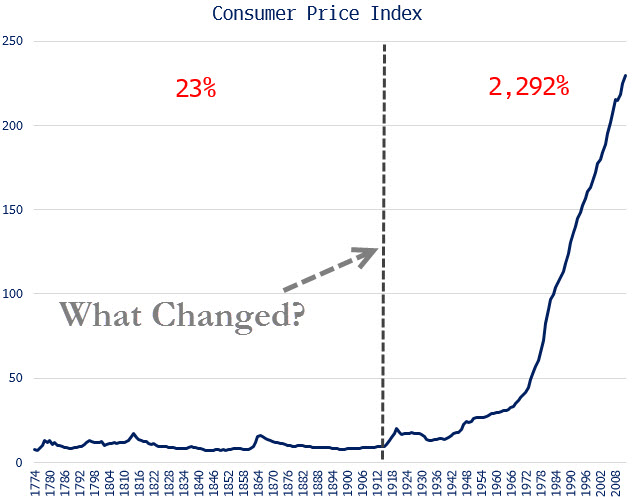
As this chart shows, the US Consumer Price Index was remarkably steady until the creation of the Federal Reserve in 1913. It has been on an explosive upward path ever since, leading most people alive today to believe that inflation and price increases are normal. They are not!

inflationhere20131122

Here is a quote about JFK in the book Crossfire:

Another overlooked aspect of Kennedy’s attempt to reform American society involves money. Kennedy apparently reasoned that by returning to the constitution, which states that only Congress shall coin and regulate money, the soaring national debt could be reduced by not paying interest to the bankers of the Federal Reserve System, who print paper money then loan it to the government at interest. He moved in this area on June 4, 1963, by signing Executive Order 11110 which called for the issuance of $4,292,893,815 in United States Notes through the U.S. Treasury rather than the traditional Federal Reserve System. That same day, Kennedy signed a bill changing the backing of one and two dollar bills from silver to gold, adding strength to the weakened U.S. currency.

Here is a well-written account of the activities at Jekyll Island that created the Federal Reserve. It is the source of the NY times quote above.

And here is an account of JFK’s Executive Order. It is the source of the quote above about Kennedy’s attempt to change this situation.

And on the question about coincidence, another US President issued currency directly, with no interest due to anyone; Abraham Lincoln was also assassinated while in office.

I salute Abraham Lincoln and John F. Kennedy, warriors for our freedom.

More shackles readied for deployment

Darth Summers made a speech on Nov. 8 to a gathering of economists at the IMF. My guess is that they had Darth (OK, Larry) give the speech because he doesn’t currently hold a position with any institution that could then be blamed and hated for the policy promoted in the speech. (Here’s the speech, though I don’t recommend it.) However, I think it wise to consider the speech an official announcement of the latest wicked that this way comes.

The policy is that savers will soon be hit with negative interest rates. Now Larry didn’t say this directly, he slithered around it and offered the “clear justification” for it. But in reviews of what his admirers called a “brilliant” speech, the admirers were quite clear in their understanding: negative interest rates…in cashless society! That was the full policy implication.

So people would have to pay the bank interest on their own savings. So if the negative interest rate were -3%, if you had $100 in your account, you’d have to pay the bank $3 in interest. And just in case anyone had any ideas of getting their savings out of the banks, well, get their savings out into what? In a cashless society, your money would simply be an electronic entry in an account. Getting your money “out” would mean spending it. Which is the problem that Summers and his fiends say they are trying to solve: how to get people to spend, spend, spend their money. They say there isn’t enough “aggregate demand.” Don’t have any money? Then borrow some, it’s really cheap. But in any case, spend!

Of course, this would also mean that when the government borrows money, the interest rate would be negative for them as well. The more money they borrowed, the more money they would collect as the lenders paid them interest!

Now it goes without saying, though I’ll say it anyway, that if you went to borrow some money, this negative interest rate thing would not apply to you. You’d still have to pay interest on your loan. This negative thing would only be for them, that is, the banks and governments. Oh, and large corporations, how could I leave them out. But not you or me. Whether borrower or lender be, either way, we’d have to pay. Know what the average interest rate consumers are paying on their $846 billion in outstanding credit card debt? 13%. Do you think the banks are going to give up that bonanza?

Now any rational person might think: They’ll never do it! Negative interest rates would wreck every pension fund in the world. And so they would: pension funds are all dependent on collecting interest to meet their future obligations. But too bad. If people can’t collect pensions, then they’ll have to stay in the workforce. And with all that competition for jobs, companies can pay lower and lower and lower wages. Why do you think they outsource work across the world! Do you think this paragraph goes to far? Then consider this: Collecting Donations For Wal-Mart Employees That Cannot Afford Thanksgiving Dinner?

At the Wal-mart on Atlantic Boulevard in Canton, Ohio employees are being asked to donate food items so that other employees that cannot afford to buy Thanksgiving dinner will be able to enjoy one too.

So, they think that taxing people’s savings, both in their bank accounts and in their pensions, will get the economy on a sound footing again. Because that’s what these policies are, they are taxes, part paid to government and part to the banks. So why don’t they just say that? Two reasons: first, people tend to get angry about new taxes and they tend to vote out whoever levies new taxes; and, the group at the Summers speech are economists, and all economists know that raising taxes squelches economic growth. So they can’t call it a tax or everyone would point out that the policy is anti-growth. Which it is. But logic left the room of mainstream economics years ago. They maintain their lofty positions as Machiavelli advised: they serve their governing masters well. So these policies have nothing to do with logic. The governing masters keeping their power, that’s what it’s all about. And these economists know who spreads the caviar on their toast points. These policies are designed only to preserve the powermonger status quo.

Plus, they are fairly sure it will be a long time before the public catches on. They can just repeat over and over that this is for jobs and growth, and the majority, desperate for good news, will believe it. And in this ploy, the economists are likely correct. They have been engaged in multi-$trillion Quantitative Easing (money printing) for years and, according to a Reuters poll, three quarters of Americans don’t even know what QE is. And people weren’t asked to explain it, they were given a multiple choice question, so 20% could have answered correctly just by random choice!

Twelve percent of respondents thought QE was a computer-assisted program that the Fed uses to manipulate the dollar. Another 11 percent thought it was part of the Dodd-Frank Wall Street reform legislation enacted following the crisis.

So the economists of The Powers That Be figure they can obfuscate their way through just about anything.

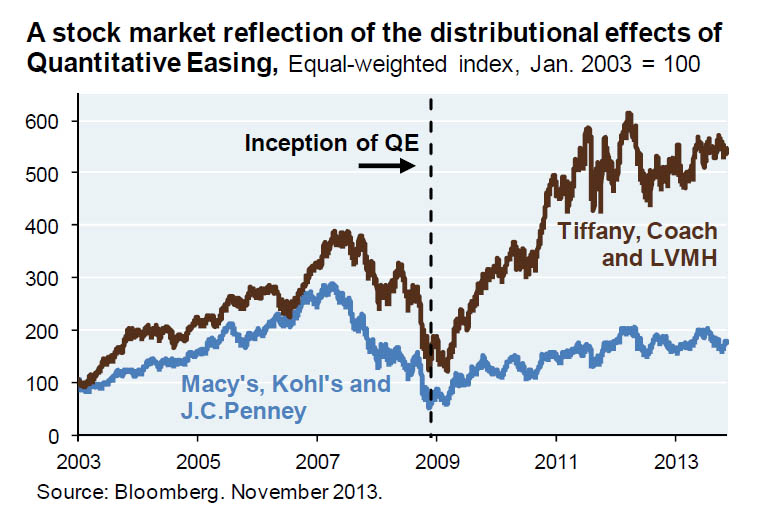
So let’s get this straight. These thieves want to steal people’s savings and pensions. So that people must remain as wage slaves till they drop, filling a growing labor pool being paid wages that are declining in all of the developed economies. And they’ll be great fodder for the upcoming war economy, grateful for the opportunity to build weapons that kill in better and better ways. While the rich and powerful get more caviar, as shown on the chart below. The dark brown line is the average stock price of retail for the rich: Tiffany, Coach, and LVMH. Those stocks have risen 500% since their 2009 lows and are over 30% above their former peak in 2007. The blue line is Macy’s, Kohl’s, and JC Penney, where the disappearing middle class shops. Those stocks are up 100% since 2009 and are still 30% below their former peak in 2007:

QE effect on shoppers

That is a great demonstration of who is receiving all that newly printed money and who is not. These folks want more slaves. And the ability to bomb into chaos any region that does not offer up its people into the slave pool.

Finally, a Fed Whistleblower

The claim has been made repeatedly here and elsewhere–a claim derided as conspiracy theory by the mainstream–that the US Federal Reserve has one purpose: to protect the game of the big banks. Everything else they say and do is cover for that single goal.

Thankfully, a Fed insider has offered excellent confirmation, including apologies to taxpayers for his actions. Everyone with the slightest interest in how the world actually works should read the full article by this fellow.

As background: Talk about an insider, this guy was in charge of the program through which the Fed purchased $1.2 trillion of mortgage backed securities (MBS) from the banks in 2009-2010. The Fed conjured up new electronic currency to pay for this. They call that Quantitative Easing (QE) instead of money printing because such lying does succeed in fooling most of the people most of the time.

In 2009, these MBS “assets” were called toxic assets by anyone with a fondness for truth because they were large packages of mortgages backed by sub-prime and other mortgage loans that were not being re-paid, and by residential real estate collateral that was plummeting in value. In other words, the big banks peddling and holding these assets were insolvent, bankrupt, in part because of the plunging value of their MBS. So, the Fed came to the rescue, of course, buying up toxic MBS from the big banks and paying many times the pennies-on-the-dollar actual street prices of these securities (Don’t you just love the BS terminology that pervades the financial sector?) to make the banks appear less bankrupt.

Here are some choice quotes from Andrew Huszar, a true Wall St and Federal Reserve insider:

We went on a bond-buying spree that was supposed to help Main Street. Instead, it was a feast for Wall Street.

I can only say: I’m sorry, America. As a former Federal Reserve official, I was responsible for executing the centerpiece program of the Fed’s first plunge into the bond-buying experiment known as quantitative easing. The central bank continues to spin QE as a tool for helping Main Street. But I’ve come to recognize the program for what it really is: the greatest backdoor Wall Street bailout of all time

My part of the story began a few months later. Having been at the Fed for seven years, until early 2008, I was working on Wall Street in spring 2009 when I got an unexpected phone call. Would I come back to work on the Fed’s trading floor? The job: managing what was at the heart of QE’s bond-buying spree—a wild attempt to buy $1.25 trillion in mortgage bonds in 12 months. Incredibly, the Fed was calling to ask if I wanted to quarterback the largest economic stimulus in U.S. history.

This was a dream job, but I hesitated. And it wasn’t just nervousness about taking on such responsibility. I had left the Fed out of frustration, having witnessed the institution deferring more and more to Wall Street…

In its almost 100-year history, the Fed had never bought one mortgage bond. Now my program was buying so many each day through active, unscripted trading that we constantly risked driving bond prices too high and crashing global confidence in key financial markets. We were working feverishly to preserve the impression that the Fed knew what it was doing.

It wasn’t long before my old doubts resurfaced. Despite the Fed’s rhetoric, my program wasn’t helping to make credit any more accessible for the average American. The banks were only issuing fewer and fewer loans. More insidiously, whatever credit they were extending wasn’t getting much cheaper. QE may have been driving down the wholesale cost for banks to make loans, but Wall Street was pocketing most of the extra cash.

From the trenches, several other Fed managers also began voicing the concern that QE wasn’t working as planned. Our warnings fell on deaf ears. In the past, Fed leaders—even if they ultimately erred—would have worried obsessively about the costs versus the benefits of any major initiative. Now the only obsession seemed to be with the newest survey of financial-market expectations or the latest in-person feedback from Wall Street’s leading bankers and hedge-fund managers. Sorry, U.S. taxpayer.

Trading for the first round of QE ended on March 31, 2010. The final results confirmed that, while there had been only trivial relief for Main Street, the U.S. central bank’s bond purchases had been an absolute coup for Wall Street. The banks hadn’t just benefited from the lower cost of making loans. They’d also enjoyed huge capital gains on the rising values of their securities holdings and fat commissions from brokering most of the Fed’s QE transactions. Wall Street had experienced its most profitable year ever in 2009, and 2010 was starting off in much the same way.

You’d think the Fed would have finally stopped to question the wisdom of QE. Think again. Only a few months later—after a 14% drop in the U.S. stock market and renewed weakening in the banking sector—the Fed announced a new round of bond buying: QE2…

Where are we today? The Fed keeps buying roughly $85 billion in bonds a month, chronically delaying so much as a minor QE taper. Over five years, its bond purchases have come to more than $4 trillion. Amazingly, in a supposedly free-market nation, QE has become the largest financial-markets intervention by any government in world history…

And the impact? Even by the Fed’s sunniest calculations, aggressive QE over five years has generated only a few percentage points of U.S. growth. By contrast, experts outside the Fed, such as Mohammed El Erian at the Pimco investment firm, suggest that the Fed may have created and spent over $4 trillion for a total return of as little as 0.25% of GDP (i.e., a mere $40 billion bump in U.S. economic output). Both of those estimates indicate that QE isn’t really working.

Unless you’re Wall Street. Having racked up hundreds of billions of dollars in opaque Fed subsidies, U.S. banks have seen their collective stock price triple since March 2009. The biggest ones have only become more of a cartel: 0.2% of them now control more than 70% of the U.S. bank assets…

So the big-bank rich got very much richer. What a surprise. A perfect strategy, still in full implementation in plain site, by a Fed fulfilling its real goal. The full article is here.

The quotes above might as well be directly from those derided for years as Fed conspiracy theorists. The latest survey I saw said that 74% of US citizens favor a full audit of the Fed, which is a private bank masquerading as a quasi-government agency, owned by the big banking families of the world, and which has the concession from the US Congress to print money. (Nice concession, eh?) But those 74% will likely be ignored. 90% of US citizens were against the TARP bank bailout in 2009, but it became law anyway. The people’s wishes are meaningless when it comes to the criminal partnership between Wall St and Washington DC.

Huszar didn’t name names or produce documents, so unlike other US whistleblowers, he likely won’t be jailed or hauled into endless court proceedings. But maybe this will encourage others to speak up about the Fed, perhaps even to reveal the truly nefarious aspects of this organization and its owners. And maybe someday the politicians who take millions from Wall St will become whistleblowers and tell us what marching orders they are given when they pocket those funds. Hey, a person can imagine! There’s no law against that….Is there?

Plug-In Vehicle Update

Updating In Praise of Plug-In Vehicles, our mileage after two months with the Chevy Volt is 101 miles per gallon (2.3L/100km for the metric-minded). That included four drives of 350 miles and one drive of 250 miles during which the car runs from electricity only for the first 45 to 50 miles (70+ km), after which it runs from gasoline.

And in response to those who e-mailed warnings that electric vehicles are a bad idea in a world with an imminent EMP event: even though I have made the gesture–because it’s so easy to do–of storing my backup generator and other small backup electronics in a Faraday cage, I do not consider a devastating EMP event to be likely. As stated before, what I detect is accelerating evolution, with likely supply line disruptions. That is what I see, so that is what I plan for. I see no evidence of an impending planetary reset event. With humanity about to reap the full consequences of its good and bad decisions about finance, governance, war, health care, pollution, overuse of resources, taxation, energy, communications, etc., the conditions on this planet are perfect for humanity to learn how to live and how not to live. I think humanity will benefit mightily from this ingenious setup. Let’s see if we can.

The Weather Gets Even Wilder

Just days after the Weather Wildness Update comes deadly Typhoon Haiyan. Some say it is the most powerful storm to make landfall in modern times:

Philippines storm leaves estimated 10,000 dead, destruction hampers rescue efforts

Mainstream headlines published as the storm was hitting the Philippine coast claimed that the storm would not be devastating. But it’s tough for them to say “Nothing to see here, move along” when thousands die.

The amazing Ageless Wisdom Foundation, based in Manila, is already in the field, organizing relief efforts. With the Philippines on the front line of earth changes, they are becoming veterans of dealing with emergencies. They add this to their usual work: ever-honing their formidable attention through their individual multi-decade meditation practices and esoteric studies; building their own retreat center; giving telepathic healings around the world that are so powerful that if you are in the room when they are addressing a person in need in that room, you can feel the entire room heat up, even half a planet away; working in the poorest sections of Manila; the list goes on. And that’s all in addition to their people each working to make a living. They quietly change lives for the better, a beacon to us all for how to be a human during this Transition.

Weather Wildness Update

A few days ago, just a single year after Superstorm Sandy, I saw a post in which someone claimed that the weak Atlantic hurricane season meant that the weather wildness posited by the climate change people was a thing of the past. I passed on quickly (and didn’t save the link), figuring that this was either from the global cooling propaganda crowd, or from someone with an incredibly narrow view of the world. People in Mexico (hit by two hurricanes at once), the UK, and the “small” continent of Asia, which has experienced epic flooding this year, would be likely to disagree with that “thing of the past” idea.

Here are two weather wildness aggregator videos made by someone who does not include Bible quotes. Note the mention by a news commentator in the first video of “the 23rd typhoon to hit this year”:

     Signs Of Change The Past Week Or So October 2013 Part 1

     Signs Of Change The Past Week Or So September 2013 Part 2

A Cycle that Says “Get Ready”

There haven’t been many posts here lately, in part because it looks to me like we are on the precipice of major changes. So I’ve been spending some time finalizing my own preparations in terms of food (backup supplies and the infrastructure for growing more), electricity, water, and so forth. (Hint, hint.) Many think (hope?) that The Powers That Were can keep this all going for years. With the clear acceleration of infighting among the elites, to me that seems like a very bad bet.

So I found this post from Deflation Land to be interesting in terms of us being right on the cusp of major changes:

     Why I stopped worrying and learned to love the currency collapse

“For the past 300 years, the historical pattern has been for the era marked by a century to continue into the following century by fourteen or fifteen years.

“Let me explain. Everyone knows that the 19th Century, its uprightness, its optimism and sense of purpose, the halcyon days of British Empire, came to an end with World War I, starting in 1914 and building to a nasty crescendo by 1916. The 20th Century had arrived, and it had some real horrors in store for us.

“But if we return back another hundred years, we notice that the 18th Century ends in 1815 with the final defeat of Napoleon, that final project of the Enlightenment and of the French Revolution.  With the Congress of Vienna in 1814-1815, we have a new Europe along the lines of Metternich’s plan, and the 19th Century at last is here.

“In 1713 and 1714, we have the Treaties of Utrecht, Baden, and Rastatt, bringing an end to the era of Spain as a major power, and the rise of the Habsburgs.  Louis XIV dies in 1715, after reigning for 72 years.  The Baroque period is over, and we are now firmly in the 18th Century.

“We still live in the 20th Century…We still live in an era of Pax Americana, the old republic very much a strained and tired Empire now, with the U.S. Dollar as the world’s reserve currency.

“That is going to change.

“The next task for History is to dismantle the untenable structures and institutions put in place by late Modernity, which have been extended now as far as they can go. Our debt-based monetary system will collapse, our unbacked fiats will be worthless. The debts and unmeetable obligations will all default.

“There are ironies and great contradictions as the former home and hope of Liberty becomes viciously unfree and increasingly despotic. Our leaders no longer govern, but try instead to rule us — they are less legitimate with each passing day, their laws corrupt or worse. They are nearly finished, and will be swept away with the tide.

“Just as in 1914, the internationalist system will break down, dashing the hopes of the would-be first-world nations. We will probably have a pretty good war as well, or many local ones worldwide. These transitions tend to involve war.”

*  *  *  *  *

Combine the above with the Wheeler War Cycle and other war cycles discussed here, and it looks like our current faux stability–in which the gears of government and the economy grind on and on with little progress in any direction–will, within months, be a memory. The full Deflation Land article is here.

The Money Noose Tightens Further

The desperate folks in government are looking for money everywhere. In fact, at the last two G20 meetings, the richest 20 nations seemed able to agree on only one thing: that they will automate the trading of financial records with each other to try to catch corporations and individuals who are trying to avoid taxes. Other than that, the meetings were said to have a lot of bickering over Syria, NSA global spying, the Japanese debasing their currency faster than other regions, and so forth.

The International Monetary Fund, whose employees pay no taxes at all on their own salaries, is recommending a 10% wealth tax on all European Union citizens. Why? “..to restore debt sustainability.” In other words, they are admitting that EU countries are drowning in unpayable debt loads, so they advise snatching 10% of the wealth of everyone in those countries to pay off some national debts. And what will that 10% wealth grab accomplish? They say it will restore national debt levels to where they were in 2007. 2007?!? Wasn’t that the precipice of the financial crisis? They don’t seem to understand that countries were already drowning in too much debt in 2007, which was one of the primary enabling factors of the financial crisis. They say this is a one-time wealth grab. But after they grab that 10% of people’s money and it fixes nothing, what will they advise then? Grabbing 20% perhaps? More? Very likely.

Poland joined Argentina, Hungary, Ireland, Cyprus, and France in confiscating people’s pension assets. The Polish government grabbed national bonds held in pension funds managed by private sector money managers (think IRA or 401K managers ) and pulled them into the public sector pension program. Why? To count those bonds as government assets rather than debts so that their debt to GDP ratio looks better so they can borrow more money more cheaply in the open market. (Now you might think: why would bond  investors fall for such pathetic tricks? Why indeed. Don’t ask me. These “investors” are probably the same people who had money with Madoff.)

And Chase has told lots of its small business and individual clients that they can no longer use wire transfers to transfer money out of the country. If this sounds to you like progress along the lines of the dreaded currency controls, then you are being rational and astute. Currency controls, through which people are prohibited from moving their money out of its home country, are a plague on people when a country’s currency is plummeting in value. Ask people in Argentina how that feels, they’ve been through it twice.

Governments tried printing and borrowing lots of money to boost economies so they could collect more taxes. This has backfired: the economies barely grew while the debt continues to grow wildly.  Here’s what it looks like in the US, where the debt is the red line and the economy the blue line:

Debt_GDP

Some people, like Dick Cheney and Paul Krugman, say “who cares,” but the problem is, debts costs money, that is, you have to pay interest on the debt and you have to pay back the principal. And when the debt load keeps increasing faster than the economy, and faster than tax collections, it’s a classic case of unsustainability. Which is why governments are now starting to confiscate. They want more money, folks. They want to get it from you. Protect yourself accordingly.